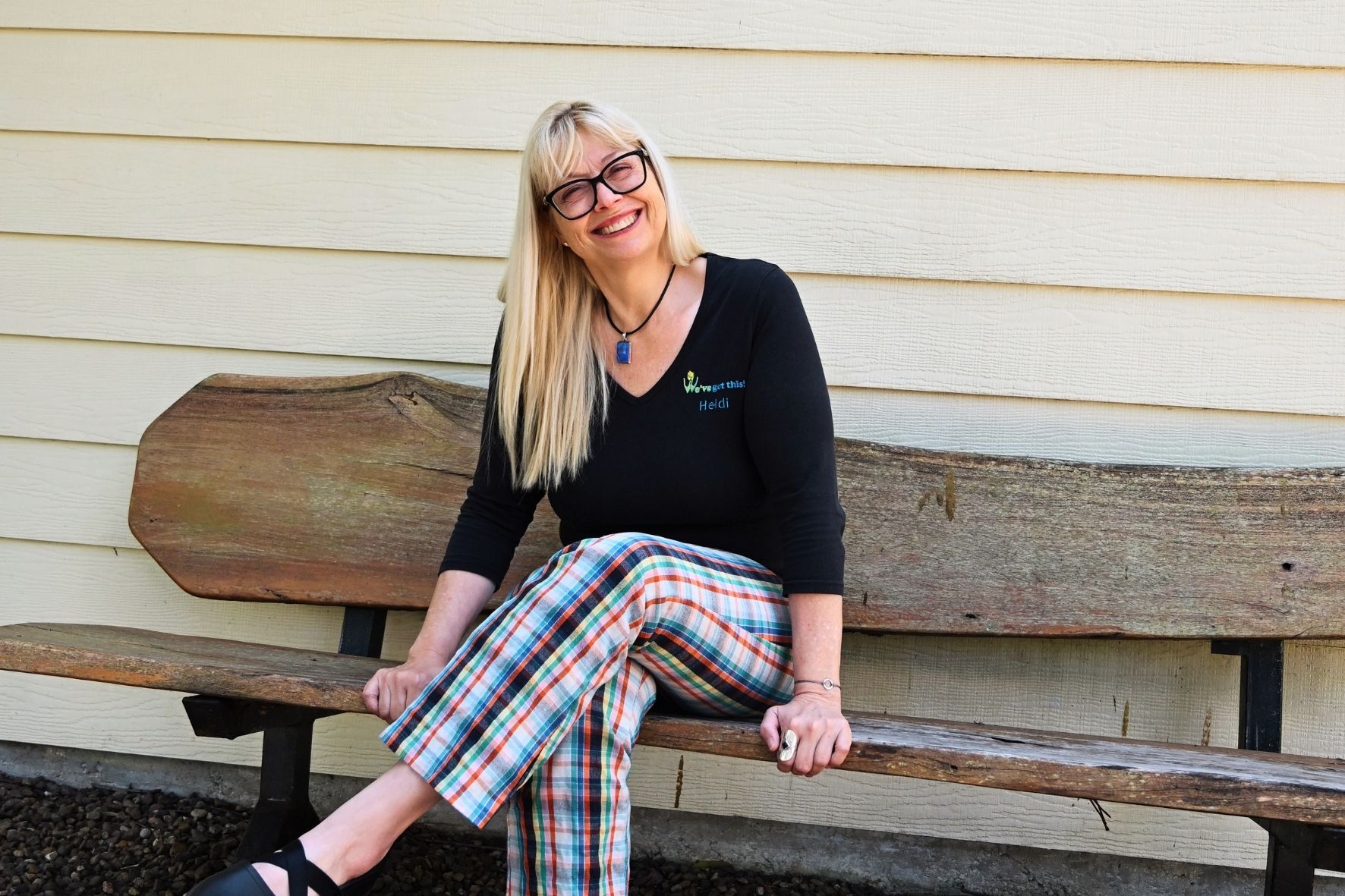
Written By Heidi Williams – We’ve Got This
What if the kindness we give to others can only grow as deeply as the kindness we have learned to give ourselves?
I think of kindness like a tree. What we see above the ground – the words, gestures, patience, and compassion we offer others is supported by something much deeper. The roots are unseen, but they determine how strongly the tree can grow. For me, those roots begin with self.
One statement I often use in my kinesiology practice is: “I deeply and profoundly love, accept, appreciate and respect myself.” It sounds simple. Yet for many people, those words can feel surprisingly difficult to say, let alone believe. I understand that personally.
I grew up in a household affected by domestic violence and learned very early to be hyper-vigilant. I became highly attuned to other people’s moods and needs, learning to freeze, keep quiet, appease and make myself small when I sensed danger. I became very good at looking after everyone else. What I wasn’t so good at was looking after myself.
My own experience eventually led me to kinesiology in 2014, after a friend recommended a practitioner. I was fascinated by how kinesiology explored the connection between our physical body, emotions, thoughts, and stress. That experience began a journey that ultimately led me to study and become a qualified kinesiologist.
Today, I work with people who often do exactly what I once did, carrying patterns, beliefs, and emotional responses that developed over many years, sometimes from very early childhood.
Kinesiology is a holistic approach that helps us explore stress patterns that may influence how we think, feel, and respond. Using muscle feedback as one tool in a session, I work with each client to identify what matters to them rather than applying a predetermined formula.
No two people are the same.
One person may struggle with confidence. Another may constantly put everyone else’s needs before their own. Someone else may experience anxiety, self-sabotage, relationship difficulties or the effects of deep trauma, including sexual trauma and PTSD.
Often, the pattern makes sense once we understand where it came from, and this is where I believe kindness becomes so important.
It is difficult to be compassionate towards ourselves when we don’t understand why we respond the way we do. We can become frustrated with ourselves, judge our reactions or wonder why we can’t simply “get over it”.
But what happens when we become curious instead? What happens when “What’s wrong with me?” becomes “What has happened to me, and what might I need?”
That small shift can change the conversation we have with ourselves.
Recently, I have been working with clients carrying profound trauma. One of the most rewarding parts of my work has been seeing people leave with a deeper understanding of their triggers and practical strategies for managing them in everyday life.
For me, that’s where kindness becomes more than a lovely idea. It becomes understanding.
It becomes allowing ourselves to acknowledge what we have experienced without judging ourselves for the ways we learned to cope. It becomes recognising that some of the behaviours we may dislike about ourselves may once have served a purpose. And perhaps most importantly, it creates the possibility of choosing something different.
Kindness doesn’t mean allowing everything or everyone into our lives. It doesn’t mean putting ourselves last. Sometimes kindness looks like a boundary. Sometimes it looks like saying “no”. Sometimes it is giving ourselves permission to rest, to ask for help or simply to acknowledge that something is difficult.
Like a tree, kindness starts at the roots. When those roots are nurtured with self-acceptance, appreciation and respect, something changes in what we are able to offer the world around us.
That is the change I help people create through my work. Because, perhaps the most powerful kindness we can ever cultivate isn’t the kindness that everyone else sees. It’s the kindness we quietly learn to give ourselves.
Click here to visit We’ve Got This