By Bronte Maddaford
When we hear the words play-based learning, we often think about Prep or the early years of primary school. Yet the benefits of play don’t suddenly disappear when a child turns eight, nine or ten.
It’s important to remember that most children cannot demonstrate their true learning ability through worksheets, written projects, tests or sitting at a desk. Some children need to move it, build it, create it, discuss it, act it out or experience it before they truly consolidate a specific learning outcome or skill.
Providing playful and hands-on learning opportunities gives children different ways to learn and engage with the curriculum content and thereby demonstrate their true knowledge, understanding and abilities. Play can be intentionally incorporated into almost every curriculum area to provide for fun and interactive ways for students to learn.
Numeracy, children might operate a pretend café, calculating prices and giving change, writing menus, and practising language. Older students could design and decorate a home using a fictional budget. This requires calculating costs, measuring spaces, working with scale, researching, drawing plans, and working with a myriad of mathematical processes.
Literacy, children might create puppets or act out a story/play, become journalists interviewing characters from a novel, produce advertisements or debate what characters could have done differently.
Humanities, can involve play. Students might recreate a historical marketplace, participate in role-play, design an ancient settlement, or investigate how communities would respond to a fictional natural disaster.
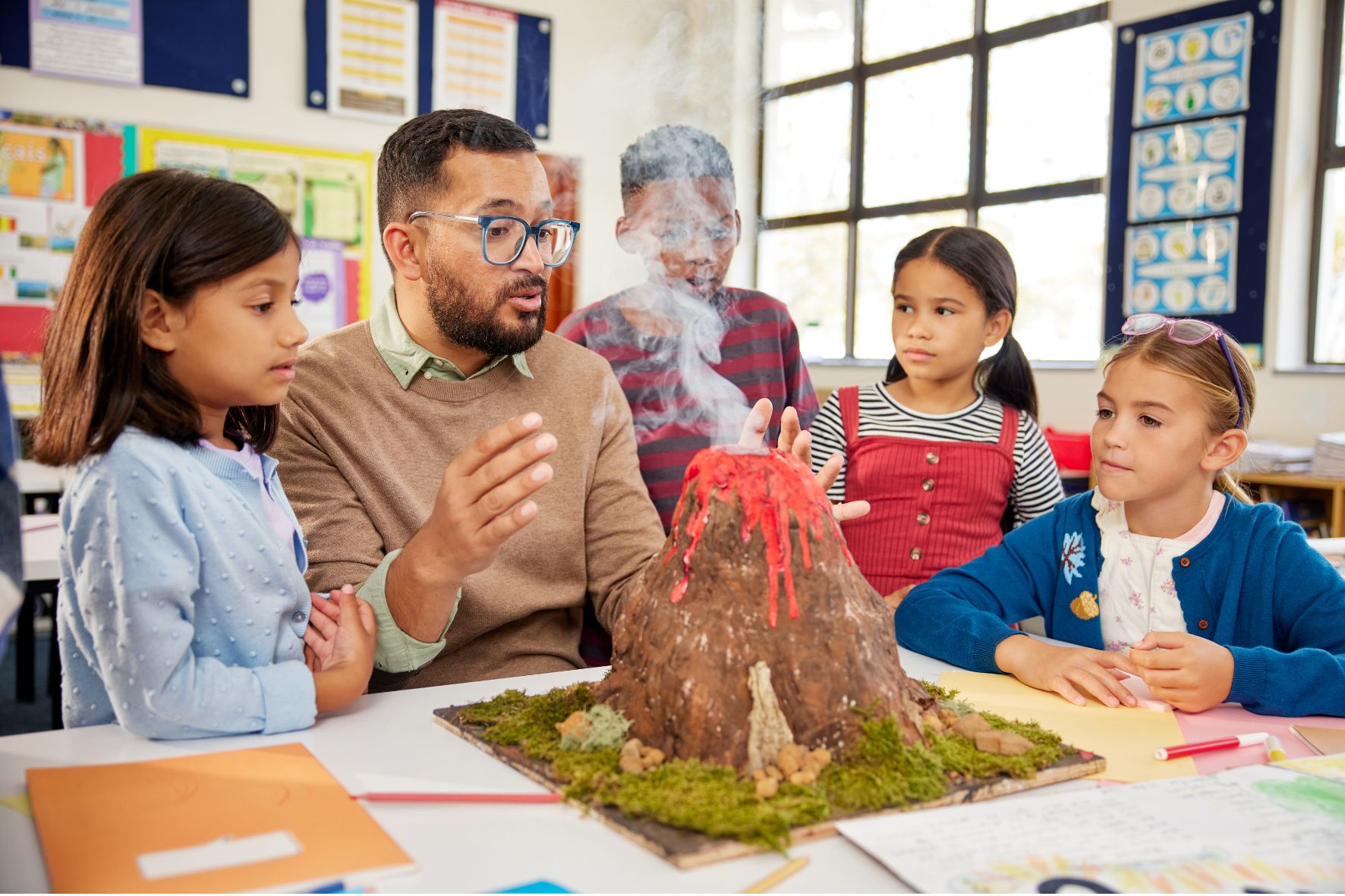
Science, students can design bridges, construct marble runs, experiment with different materials or compete to build a structure capable of holding a particular weight. Suddenly concepts such as force, gravity, measurement and engineering become something children can actually experience.
A concept that children can really grasp through play is that sometimes things don’t always go according to plan. This is a safe way to build resilience. A structure collapses. A team disagrees. Someone’s idea isn’t chosen. The experiment fails. The rules need to be renegotiated. These experiences require children to communicate, compromise, manage frustration, listen to others, problem-solve and try again.
For older primary-aged children, collaborative games and challenges can be particularly valuable because friendships and peer relationships become increasingly important. Play provides opportunities to practise leadership, teamwork, negotiation and perspective-taking.
Play in a Year 6 classroom will understandably look different from play in Prep. However, older children still benefit from curiosity, imagination, experimentation and the freedom to explore ideas. Integrating play into the primary curriculum isn’t about choosing between play and academic learning. It is about recognising that play can be one of the ways we deliver powerful academic, social and emotional learning.
Perhaps instead of asking, “Aren’t they getting a little old for play?”, we should be asking: “How can we use play differently as they grow?”
https://counsellingcompass.com.au